
A gentle start into school life
Nido (Italian for “nest”) is the first carefully prepared environment in the Montessori approach, designed for children from approximately 18 months to 3 years of age.
It offers a safe, nurturing space that feels like a second home — a place of security, independence, and respectful guidance during one of the most sensitive phases of development.

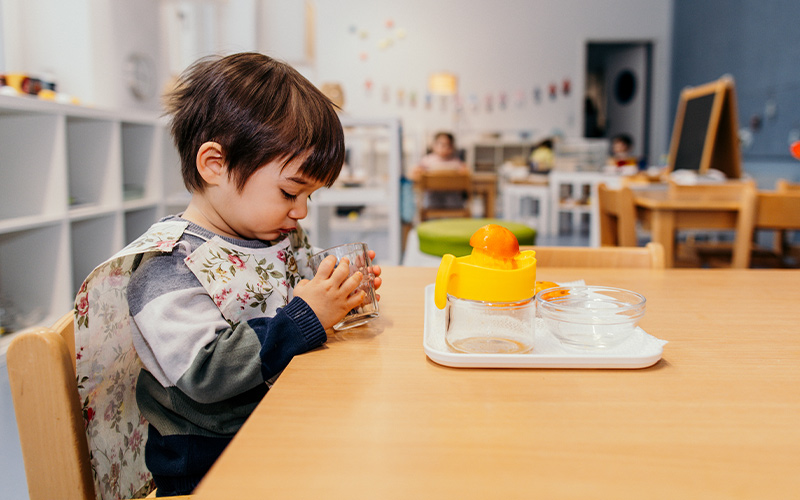
Independence from the Beginning
Inspired by Maria Montessori’s guiding principle, “Help me do it myself,” children in the Nido experience themselves as capable and active participants in their own development.
They choose materials independently, repeat activities as often as they wish, and work at their own rhythm. In doing so, they develop concentration, coordination, and self-confidence.
Educators take on a mindful, observant role. They guide gently, intervene only when truly supportive, and create an atmosphere of respect, calm, and trust.
A Thoughtfully Prepared Environment
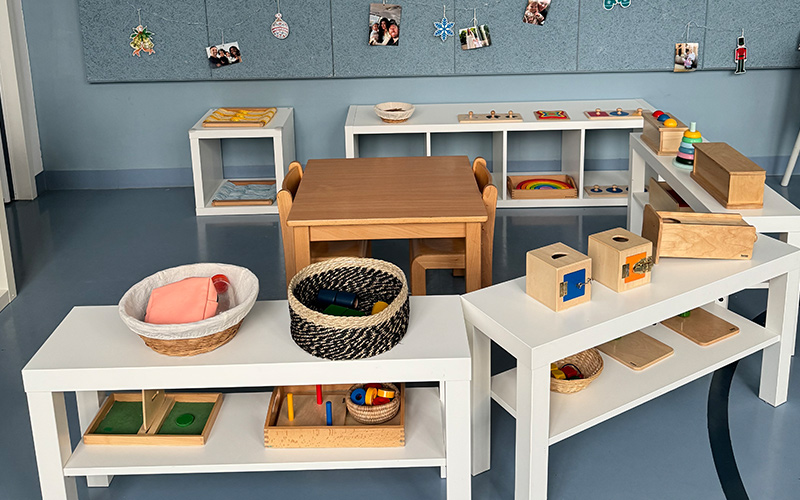
In the Nido, each child and their individual needs are at the center. The environment is intentionally designed according to Montessori principles and early childhood best practices:
- Floor-level mirrors and open movement areas that encourage free motor development
- Low shelves with carefully selected, age-appropriate materials
- Natural materials such as wood, fabric, and metal
- Clear structure and order that provide orientation and security
Everything is arranged so that children can explore independently — reaching, crawling, grasping, moving, and discovering at their own pace without constant adult direction.
This carefully prepared setting builds trust, confidence, and a sense of competence from the very beginning.

A Thoughtful Settling-in Process
We follow a structured, child-centred settling-in process based on established early childhood best practices. This gradual approach allows children to build a strong emotional bond with their caregivers while parents remain closely involved throughout the transition.
Partnership with Families
We view settling in as a shared journey between child, parents, and educators. Open communication and close collaboration ensure that each child’s transition is handled individually, respectfully, and at their own pace. At ibms Nido, we take the time children need — because a secure beginning is the foundation for confident learning.
The four phases of settling in
Phase 1 – Arrival and feeling safe
Children explore the Nido environment together with a parent or trusted caregiver. During this time, educators begin to build a relationship with the child while observing their needs and rhythms.
Phase 2 – Transition into daily routine
Short separations are gently introduced once the child shows signs of security. Familiar routines help the child understand the structure of the day and gain confidence in the new environment.
Phase 3 – Building new habits
As the child becomes comfortable, time spent independently in the group is gradually extended. Children participate more actively in daily activities, meals, and play, supported closely by educators.
Phase 4 – Stabilisation
The settling-in process is complete once the child feels secure, engages confidently with educators and peers, and movesm comfortably through the daily routine. This phase marks a stable and trusting start to Nido life.
A typical day in Nido
07.30 – 08.00
Early shift
08.00 – 08.50
Arrival Time / Breakfast
09.00 – 09.45
Morning circle / Montessori work time
09.45 – 10.00
Preparation for Outdoor Area / Playground
10.00 – 10.45
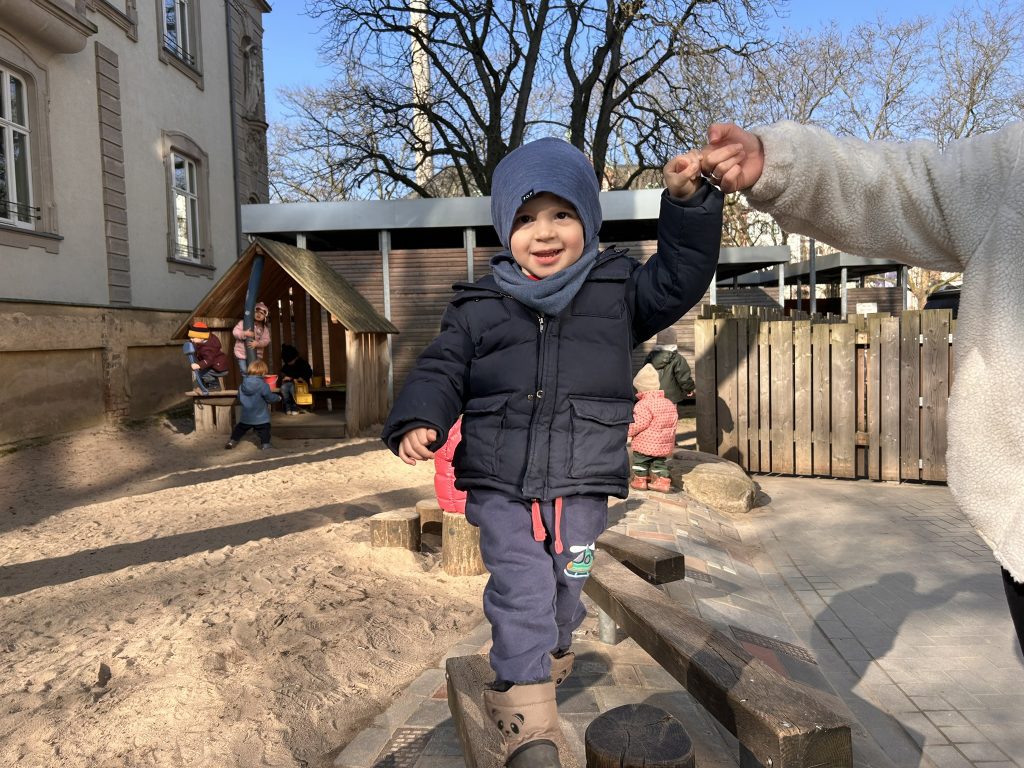
Outdoor area / Playground
11.00 – 11.30
Lunch
11.40 – 12.00
Preparation for Sleep
12.00 – 14.00
Nap / Rest time
14.00 – 14.45
Snack / Montessori work time
14.45 – 15.00
Preparation for Outdoor Area / Playground
15.00 – 16.00
Outdoor Area / Playground / Pick-up Time
16.00 – 17.00
Late Care (Registration Required)
Frequently Asked Questions Nido
Each family has a meeting with the management and the group educators to discuss the settling-in process individually. We follow the Berlin Model and adapt the transition to the child’s pace. In general, the process lasts approximately 4–6 weeks. Our priority is that your child builds a trusting relationship with the educators.
No. However, a rest period is important so children can process their daily experiences. All children go together to the sleeping room. Those who do not fall asleep or wake up earlier are supervised in the group. Since daily group life with its many social interactions can be demanding, children need time to rest and recharge.
Drop-off is until 8:50 a.m., allowing us to begin the day calmly and enter the work cycle together. Frequent interruptions can disturb the children’s concentration. A clear daily rhythm provides security and structure.
To avoid disturbing the important rest period, please pick up your child either before 11:45 a.m. or after 2:00 p.m.
No. We have extensive experience with children whose first language is neither English nor German. It simply requires some patience during the settling-in phase.
We follow the immersion principle: one educator consistently speaks English, the other consistently speaks German. Children acquire language naturally in daily interactions and through the repetition of key phrases
In the Nido, we focus strongly on fostering independence. The environment is carefully prepared so that children can do as much as possible by themselves. They cut fruit and vegetables, care for their surroundings, and learn to look after themselves. In this way, they take responsibility and build self-confidence and autonomy.
The free choice of materials allows children to follow their inner developmental needs. The materials are designed so that motor skills and coordination are refined naturally and playfully.
We aim to offer a place to all children; however, we cannot guarantee this. A separate application must be completed for admission to the Children’s House.
Choosing the right school is an important decision.
Our admissions team will be happy to support you personally.